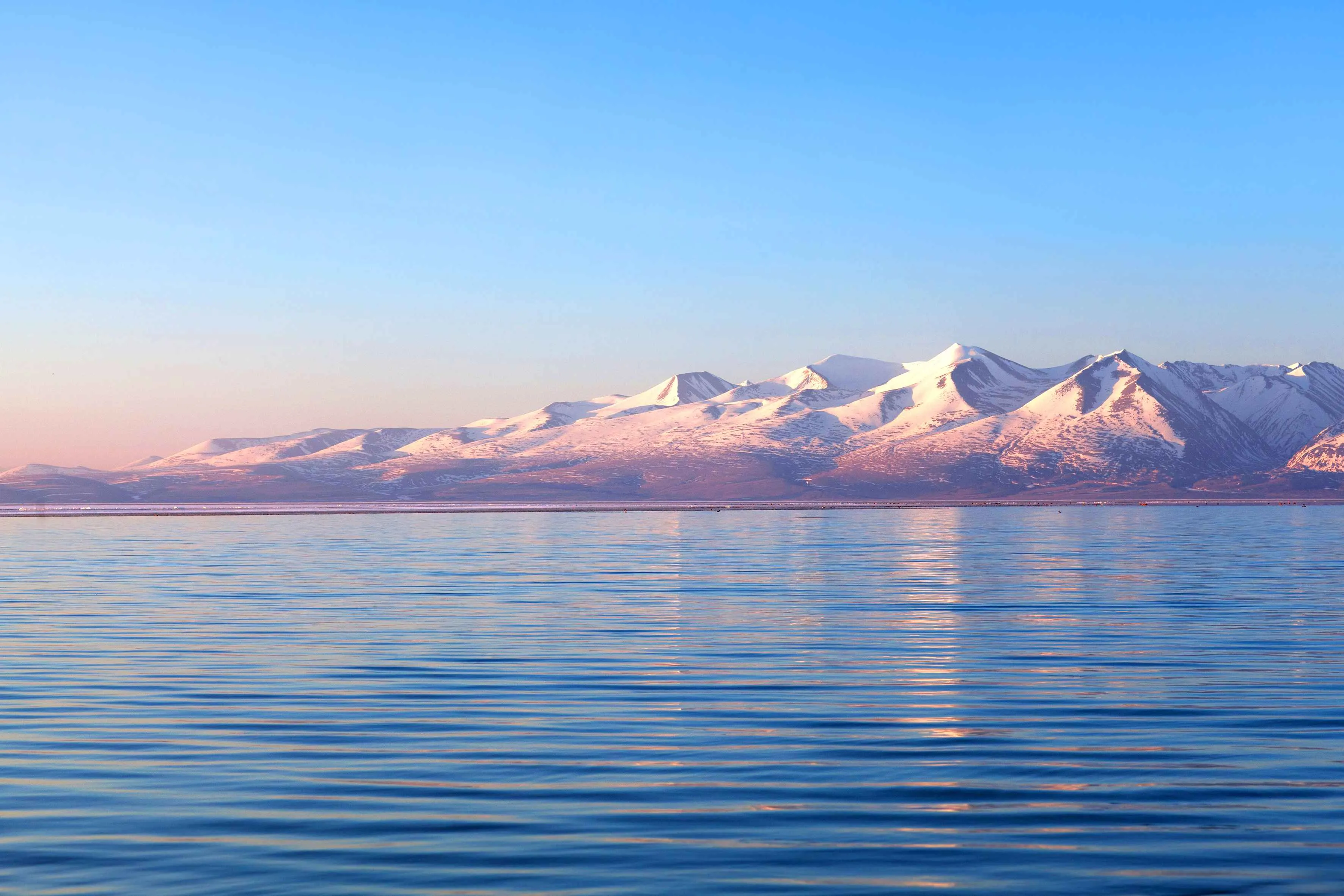
The highest freshwater lake in the world at 4,590 meters, considered supremely sacred for its purity. Paired with nearby Mount Kailash, it forms one of the great pilgrimage destinations of Asia.
The Lake of the Unconquered
In the Tibetan name Mapham Yumtso — “The Victorious Lake” — lies a story. According to legend, this lake represents the victory of Buddhist forces over the Bön religion. But beyond sectarian history, Manasarovar embodies something more fundamental: the purity of awakened mind, reflected in the clearest waters on earth.
At 4,590 meters, Manasarovar is among the highest freshwater lakes in the world. Its waters are startlingly transparent, tinted turquoise and deep blue, surrounded by snow-capped peaks with Mount Kailash dominating the northern horizon.
Sacred Geography
Together, Kailash and Manasarovar form a sacred pair:
- Kailash represents the masculine principle, stability, form
- Manasarovar represents the feminine principle, fluidity, emptiness
The two are inseparable in pilgrimage — most visitors to Kailash also visit Manasarovar, and many begin their pilgrimage by bathing in the lake’s purifying waters.
The lake is roughly circular, about 88 kilometers in circumference. Four monasteries mark the cardinal directions, though some are now in ruins. Nearby lies Rakshas Tal, a saltwater lake connected to Manasarovar by a channel — this darker lake is associated with wrathful energies and is considered less auspicious for bathing.
Practices at Manasarovar
Bathing: Despite the cold (water temperature rarely exceeds 10°C), pilgrims bathe in Manasarovar, believing the waters purify countless lifetimes of negative karma. Full immersion is ideal; even washing hands and face is beneficial.
Drinking: Pilgrims drink the water and carry bottles home to share with family members who couldn’t make the journey.
Kora: The circumambulation of Manasarovar (88 km) takes 3-4 days on foot. This kora is less commonly done than Kailash but is considered highly meritorious.
Meditation: The lake’s shores offer incomparable conditions for meditation — vast silence, pristine air, and the constant presence of sacred geography.
For many pilgrims, the moment of touching Manasarovar’s waters after a long journey is deeply emotional. The lake, unchanging for millennia, receives their prayers as it has received the prayers of countless predecessors — a mirror of sky, a reservoir of blessings, the feminine heart of Tibet’s most sacred landscape.
Principal Deities
Recommended Practices
- ༔ Kora (circumambulation) of the lake
- ༔ Bathing in the sacred waters
- ༔ Water offerings
- ༔ Meditation on the shores