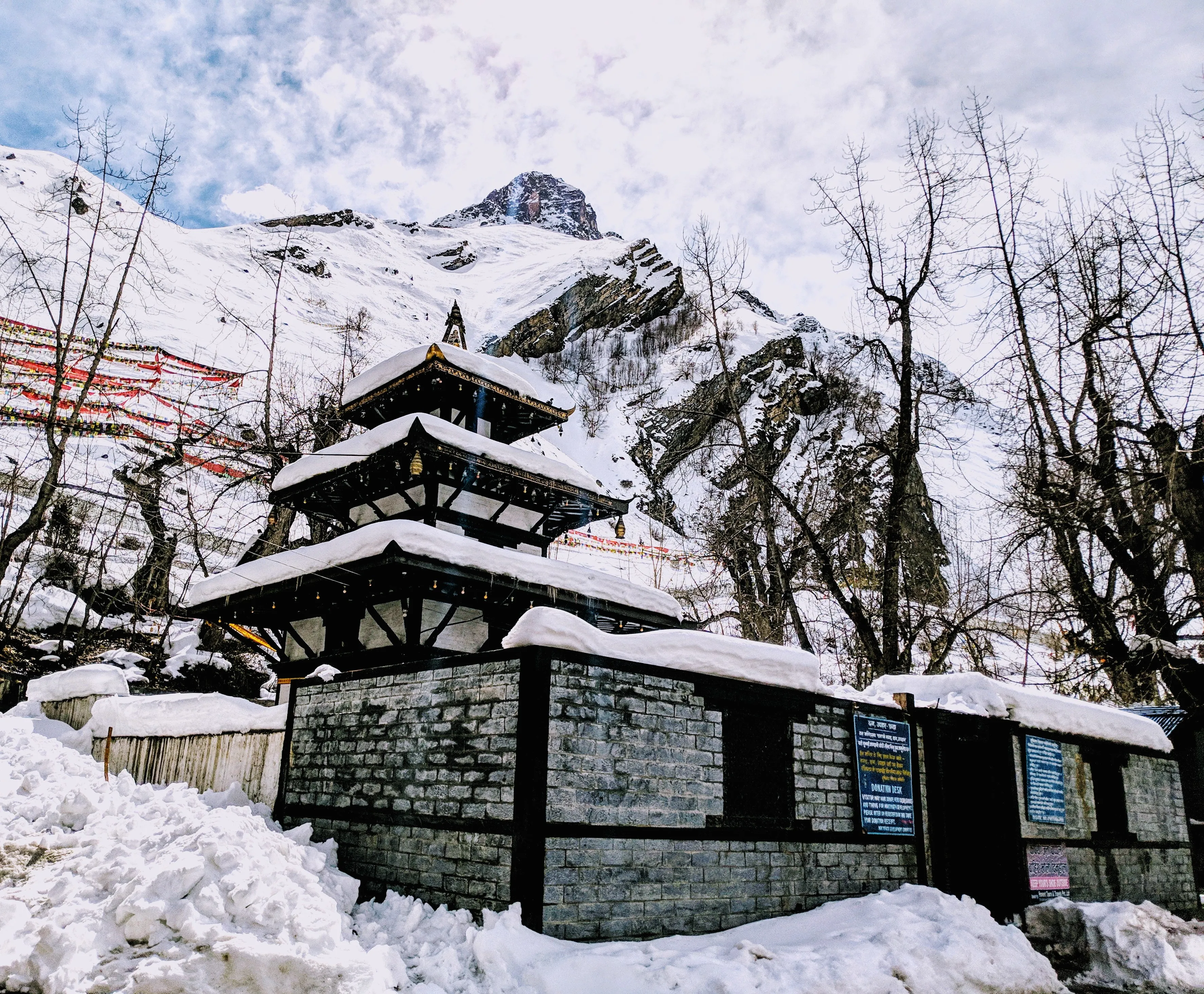
A high-altitude pilgrimage site where natural gas creates eternal flames beside sacred water springs — the miraculous combination of fire, water, and earth. Sacred to both Buddhists and Hindus for millennia.
Where Elements Merge
High in the Mustang region of Nepal, where the landscape turns from green to desert brown, sits one of the strangest and most sacred sites in the Himalayas. At Muktinath, natural phenomena create what appears miraculous: flames burning eternally from rock, water springing from the arid earth, and a temple complex where Buddhist and Hindu traditions merge seamlessly.
The Tibetan name Chumig Gyatsa means “Hundred Waters” — referring to the 108 sacred water spouts that line the temple wall. Pilgrims bathe under each spout, receiving purification from the icy mountain waters.
The Miracle of Fire and Water
Below the main temple, in a small shrine, the miraculous occurs: flames burn behind a veil of water. Natural gas seeping through rock ignites and burns eternally, even as water flows beside it.
This combination of fire, water, and earth in one place is considered supremely auspicious. In Buddhist understanding, such phenomena indicate a place of exceptional spiritual power, where the ordinary rules governing elements are suspended.
Buddhist Significance
For Tibetan Buddhists, Muktinath is associated with:
Padmasambhava, who is said to have meditated here and blessed the site during his travels through Nepal and Tibet.
The 84 Mahasiddhas, the great tantric practitioners of India. According to tradition, many achieved realization at this site, and their blessing remains accessible to modern pilgrims.
Dakinis, female wisdom beings who are said to inhabit this region. The name “Muktinath” (Sanskrit for “Lord of Liberation”) reflects the site’s power to grant spiritual freedom.
The Pilgrimage
Reaching Muktinath requires either a challenging trek through the Annapurna region or a short flight to Jomsom followed by a drive. The journey itself is part of the practice — pilgrims ascending through increasingly stark landscape, the air thinning, the modern world falling away.
At the temple, pilgrims:
- Bathe under the 108 spouts: Each spout is dedicated to a different deity; bathing under all 108 purifies corresponding negative karma
- View the eternal flames: Receiving blessing from this miraculous phenomenon
- Circumambulate the temple complex: Offering prayers and mantras
- Prostrate: Particularly at the main shrine
The site is shared harmoniously by Buddhist and Hindu pilgrims, each interpreting its significance through their own tradition. This coexistence is itself a teaching — sacred power transcends sectarian boundaries.
Associated Masters
Principal Deities
Sacred Festivals
Yartung Festival
Full moon of AugustHorse festival combining Buddhist and local traditions
Recommended Practices
- ༔ Bathing under the 108 water spouts
- ༔ Viewing the eternal flames
- ༔ Prostrations at the temple
- ༔ Trekking as pilgrimage practice