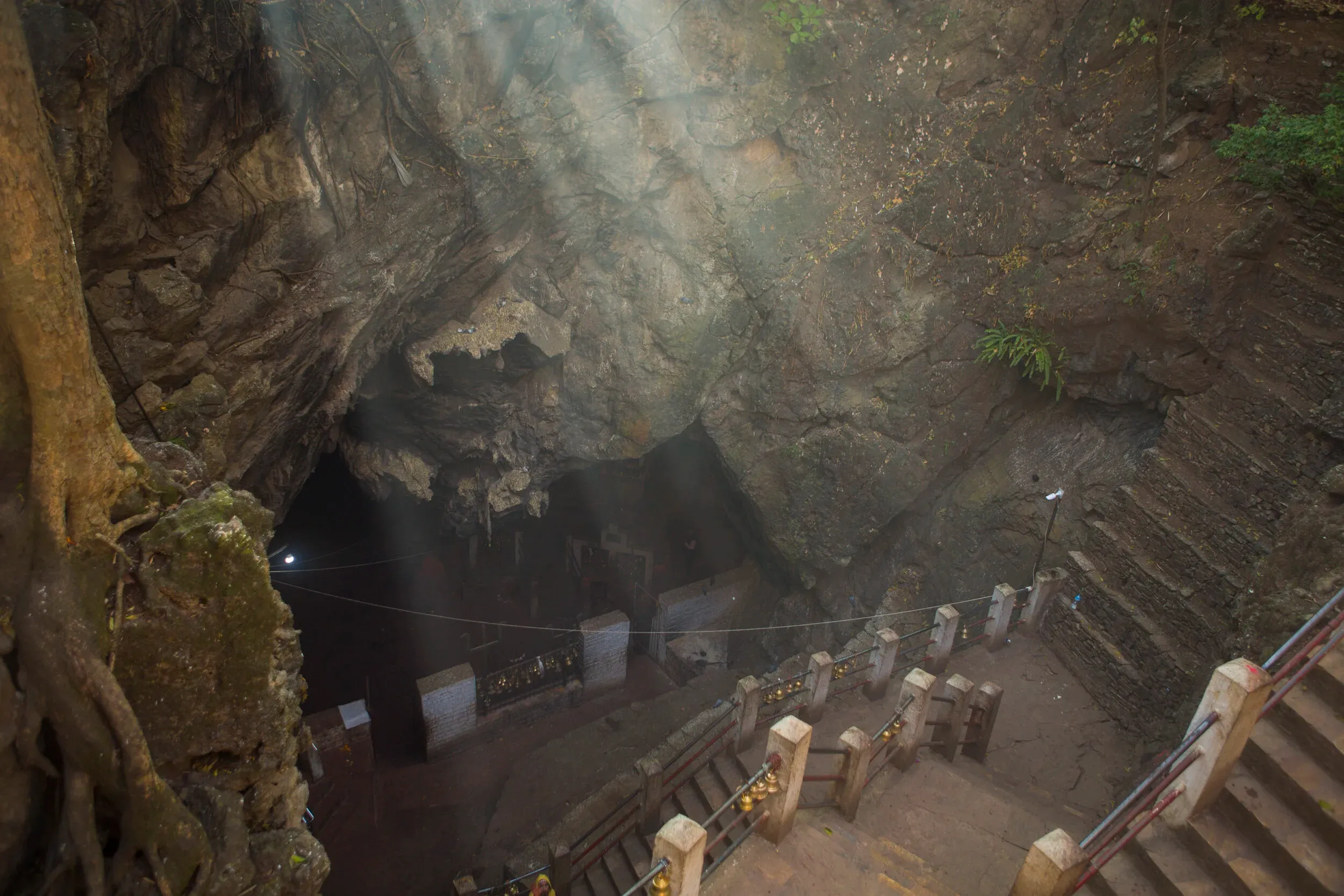
The sacred cave where Padmasambhava and his consort Mandarava practiced for three months and achieved the immortal rainbow body through the sadhana of Amitayus, the Buddha of Limitless Life.
The Cave of Immortality
Deep in the hills of eastern Nepal lies one of the most powerful sites for longevity practice in the Vajrayana world. Maratika — also known as Halesi Mahadev — is where Padmasambhava and the Indian princess Mandarava achieved the supreme accomplishment of vidyadhara of immortality through intensive practice of Amitayus, the Buddha of Limitless Life.
This was no ordinary meditation retreat. According to the traditional accounts, Guru Rinpoche and Mandarava practiced in this cave for three months, during which Amitayus himself appeared and granted them the siddhi (accomplishment) of immortal life. They transcended ordinary death, achieving the ability to manifest in rainbow body and remain to benefit beings across countless lifetimes.
The Legend
After Padmasambhava rescued Mandarava from execution by her father, the King of Zahor (who had tried to burn them alive, creating Tso Pema — the Lotus Lake at Rewalsar), the two traveled to Nepal seeking a place for intensive practice.
Guided by dakinis, they found Maratika — a cave complex hidden in the hills, naturally formed in the shape of sacred symbols. Here they performed the practice of Chimé Phagmé Nyingtik (The Heart Essence of the Immortal Goddess), a profound Amitayus sadhana.
On the full moon of the second month, Amitayus appeared in the sky above them, surrounded by countless buddhas and bodhisattvas. He initiated them directly into the mandala of immortality, and they achieved the vidyadhara level of life mastery — transcending the ordinary limitations of birth and death.
This accomplishment was not for their own benefit. By achieving immortality, Padmasambhava and Mandarava ensured they could continue guiding beings toward liberation for as long as samsara persists.
The Cave Complex
Maratika consists of a series of caves in a limestone hillside, the main cave being large enough to hold several hundred practitioners. Key features include:
The Main Cave: Where Padmasambhava and Mandarava practiced. Contains a self-arisen image of Amitayus in the rock that practitioners touch for blessing.
The Upper Caves: Smaller meditation caves used by subsequent practitioners. Some bear rock formations said to be self-arisen sacred images.
The Sacred Spring: Water that flows through the cave, blessed by Guru Rinpoche’s presence. Pilgrims drink it and carry it home for healing.
The Circumambulation Path: A kora route around the entire hill, marked by prayer flags and small shrines.
Long-Life Practice
Maratika is particularly associated with longevity practices. Tibetan Buddhists believe that practicing Amitayus or White Tara sadhanas here multiplies their efficacy enormously, due to the blessings of Padmasambhava’s accomplishment.
Teachers regularly bring groups to Maratika for:
- Long-life empowerments (tshe wang)
- Intensive Amitayus retreats
- White Tara practice
- Chimé Phagmé Nyingtik transmission
For practitioners facing illness or obstacles to longevity, pilgrimage to Maratika is considered especially beneficial. The cave’s blessing is said to extend life, remove obstacles to practice, and create the conditions for achieving the same immortal accomplishment that Guru Rinpoche and Mandarava attained.
Pilgrimage to Maratika
Getting there: Maratika is in the Khotang District of eastern Nepal. Access is via Halesi, reachable by road from Kathmandu (about 10-12 hours) or by flight to nearby Lamidanda followed by a drive.
What to do:
- Enter the main cave and touch the self-arisen Amitayus image
- Drink and collect water from the sacred spring
- Circumambulate the cave complex
- Practice Amitayus or other long-life sadhanas
- If possible, attend teachings or empowerments
Timing: The full moon of the second Tibetan month (usually March) is especially auspicious, as this is when Padmasambhava achieved the immortality siddhi. Major teachers often offer empowerments at this time.
The Blessing of Immortality
What does “immortality” mean in the Vajrayana context? It’s not simply living forever in a physical body. The vidyadhara of immortality has transcended the ordinary process of death and rebirth driven by karma. Such a being can choose when and how to manifest, appearing in whatever form benefits beings, unconstrained by the limitations that bind ordinary sentient beings.
Padmasambhava and Mandarava achieved this at Maratika. And because they achieved it, the blessing of that accomplishment remains in this place. Pilgrims who come with faith and devotion, who practice sincerely in these caves, connect with that blessing stream — receiving protection from untimely death, the conditions for a long life of practice, and ultimately, the seed of the same immortal accomplishment.
This is what makes Maratika one of the supreme pilgrimage sites of the Vajrayana world: not just the memory of what happened here, but the living transmission of its blessing, accessible to all who come with open hearts.
Associated Masters
Principal Deities
Sacred Festivals
Maratika Festival
Full moon of 2nd Tibetan monthMajor gathering for long-life practices and empowerments
Recommended Practices
- ༔ Amitayus long-life practice
- ༔ Circumambulation of the cave complex
- ༔ Retreat in the caves
- ༔ Receiving long-life empowerments