About
The project & the Foundation
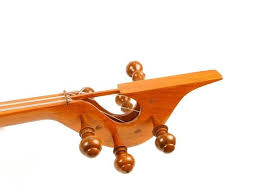
This site is a living archive of the dranyen, the Tibetan lute — a place to learn its story, understand the instrument, read and write its notation, tune a real one, and hear it played. It is a project of the Terma Heritage Foundation.
Mission
For a thousand years the dranyen has been the foundation of Tibetan traditional music. In a century of displacement and cultural pressure, much of that heritage is at risk. Our mission is to gather the knowledge of the dranyen — accurately and with citations — and pair it with modern tools, so the tradition stays alive, authentic, and freely accessible to everyone: curious newcomers, players, teachers, and academic researchers alike.
What you'll find here
- History & origins — the instrument's thousand-year story, with sources.
- The instrument — how it's built, and its re-entrant La-Re-So tuning.
- Notation — from animal-sound names to today's numbered system.
- Music & genres — Gharlu, Nangma-Toeshey, folk and street songs.
- Tuner & Notation writer — tools to tune and compose.
- References — the bibliography behind the archive.
Team & credits
Sound samples
Tenzin Norbu “Tennor”Dranyen artist, Tibetan Institute of Performing Arts (TIPA) — named in the scholarly literature among TIPA's leading 21st-century dranyen performers.
Tuning
Verified with a master dranyen player
The true D-major, re-entrant La-Re-So tuning was given by a master and confirmed by acoustic analysis of the recordings.
Acknowledgements
The knowledge base draws on the scholarship of Tashi Tenzin (Tibet Policy Institute) and many others listed in the references, and on the work of the Tibetan Institute of Performing Arts in keeping this tradition alive. We are grateful to the masters, teachers and players who carry the dranyen forward.
Contributions welcome. This is a living archive. If you are a player, teacher or scholar with corrections, recordings, repertoire or sources to share, your help will make it more complete and more accurate for everyone.